
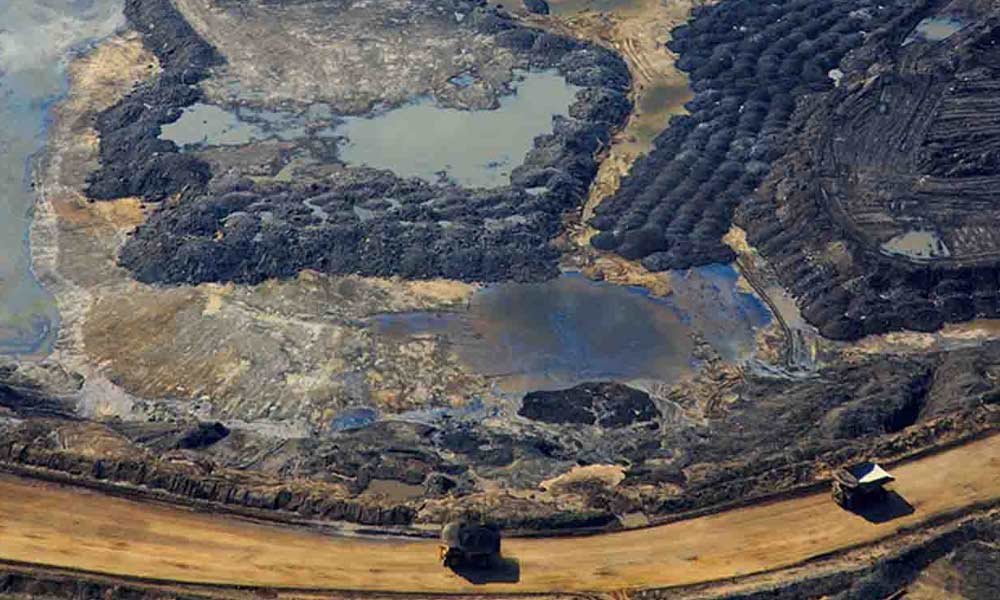



Unemployment in the oil division was developing, and numerous earth cognizant tradespeople attempted to legitimize their working in a carbon-serious industry that adds to environmental change and its belongings.
Understanding that his colleagues had similar concerns, Hildebrand considered Iron and Earth, a national activity to retrain tradespeople working in the fossil fuel industry to move into the renewables part. “The arrangement of Iron and Earth happened over numerous break room discussions in the oil sands,” Hildebrand describes. “My collaborators and I needed to see renewable vitality advancements joined all the more essentially into our work scope, so we chose to make a move.” As indicated by Hildebrand, the association straightforwardly benefits oil sands laborers by interfacing them with data, preparing openings and partners in the renewable vitality area. “We likewise give a stage to specialists to advocate for renewable vitality employments,” he includes. Notwithstanding extending tradespeople’s present extent of work, the activity additionally expects to retrain the individuals who were laid off after the worldwide drop in oil costs, which, as indicated by the Canadian Association of Petroleum Producers, prompted to the loss of more than 100,000 occupations by and large in 2015. As of now, Iron and Earth gloats more than 450 individuals from different exchanges, including boilermakers, similar to Hildebrand; circuit testers; ironworkers; pipe fitters; workers; and that’s only the tip of the iceberg. In spite of the fact that the activity’s first concentration was coordinated to the sun powered industry – planning to retrain 1,000 out-of-work oil sands laborers to introduce sun based boards in Alberta – its individuals see potential for work in different ranges, including wind control. “Sun powered PV is separated to circuit repairmen for preparing, however innovations like wind, biofuels, biomass and geothermal use a more extensive scope of modern exchanges used in the oil sands,” says Hildebrand. “This work will help the twist business by seeing the laborers profiting from the business and building more extensive support for renewable vitality improvement,” he says. “What’s more, the region of Alberta will profit by having a renewable vitality workforce prepared to meet the requests of a rising industry.” This past November, Iron and Earth openly acquainted its arrangement with place words enthusiastically. Titled the Workers’ Climate Plan, the report “portrays how Canada can turn into a pioneer in renewable vitality, and a net exporter of renewable vitality items, administrations and innovation, by tackling the modern exchange aptitudes of current vitality division laborers.” Strikingly, a significant number of these specialists in the building exchanges either as of now have the essential abilities fundamental for renewables work or they have transferable aptitudes that would empower a smooth move. As indicated by the arrangement, “The similarity or close similarity of existing abilities with renewables is broad: Electricians are expected to create and introduce sun based boards, welders are expected to manufacture wind turbines, drillers and boring specialists are expected to find and keep up geothermal wells, et cetera.” The Workers’ Climate Plan incorporates investigation of more than 1,000 study reactions enumerating tradespeople’s encounters working in the vitality area, feelings on the move to renewables, and worries about the economy and environmental change. Referring to remarks from a few exchange specialists, the report highlights the general agreement that laborers would welcome a move to spotless, elective vitality – both on an individual and expert level. “I think profoundly about the earth and feel that the future should be renewable vitality. I additionally on a very basic level put stock in a simply move for oil sands laborers,” remarks one exchange specialist. Taking a gander at the numbers, the review found that 63% of respondents said they could move to renewables ventures “specifically with some preparation,” and 16% said they could move with no extra preparing by any stretch of the imagination. Besides, of vitality division specialists detailed they were notwithstanding ready to take a compensation slice to move to renewable vitality. To make this a reality, Iron and Earth is approaching the administration to give subsidizing to the important preparing programs and to advance openings for work that bolster a low-carbon economy. “We have had a great deal of positive gatherings with the administration of Alberta and the legislature of Canada, and we are attempting to secure stipends for preparatory showing activities and preparing programs,” Hildebrand says. “Numerous unions in Canada are exceptionally steady of renewable vitality, and we are cheerful that Canada’s building exchanges will build up a solid position for these developing advances.” All that being stated, the oil sands have been a key industry for the Canadian economy for a considerable length of time, and Iron and Earth individuals understand that many will depend on these employments later on. All things considered, the activity says its objective is not to close down the oil sands but rather to “see they are overseen all the more economically, while building up our renewable vitality assets all the more aggressively.” With an end goal to stretch out into the wind business, Iron and Earth marked an update of comprehension (MOU) with wind vitality organization Beothuk Energy Inc. (BEI) in July 2016 to encourage the apprenticeships and retraining important for oil and gas specialists to move into the seaward wind division. As per an organization discharge, BEI proposed six seaward twists cultivates in Atlantic Canada with a consolidated 4,000+ MW of introduced limit. Under the MOU, the organization arrangements to make around 10 employments for every megawatt delivered. The gathering means to continue developing in numbers and crosswise over regions, having effectively extended outside of Alberta to incorporate a Newfoundland part. With a solid wind vitality potential – one of the most grounded in any locale in North America – Newfoundland and Labrador is especially appropriate to profit by this move far from fossil powers and to the renewables advertise. Hildebrand is idealistic about the eventual fate of Iron and Earth, taking note of that the gathering’s exchange aptitudes can help the world meet atmosphere targets and approach net-zero by 2050.